
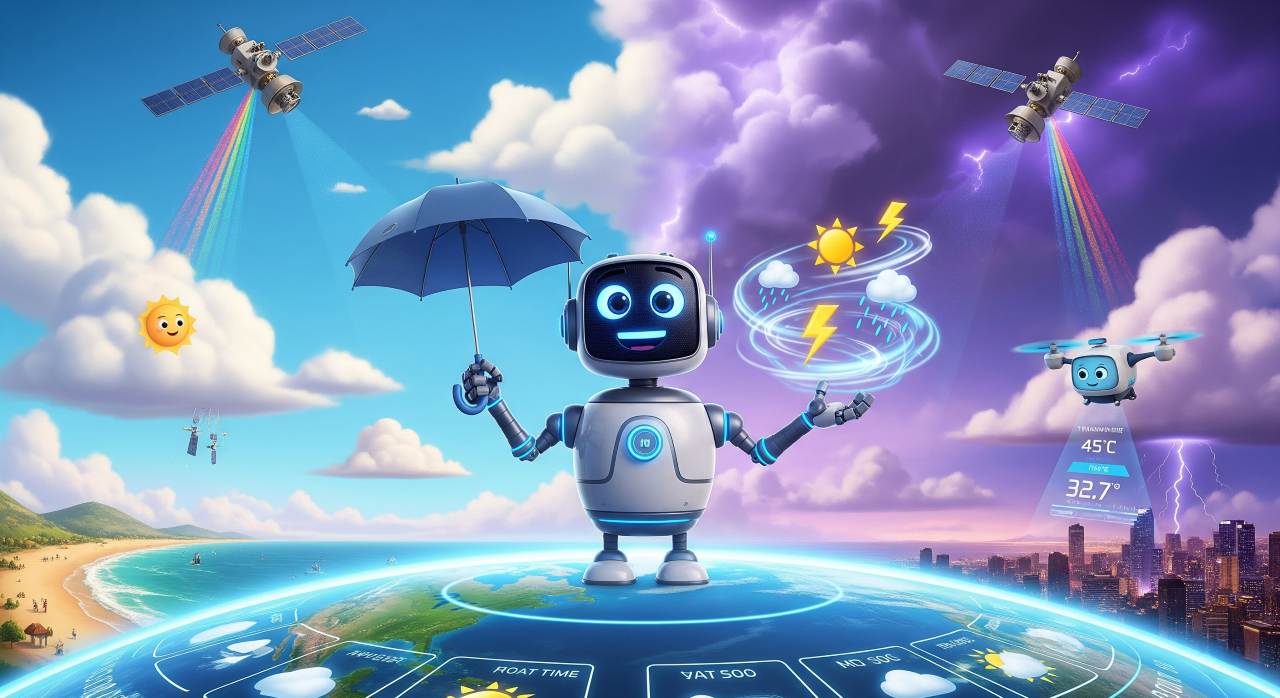
Weather isn’t just small talk anymore—it’s big business, a public safety issue, and a tech arms race. From heatwaves in the UK to billion-dollar hurricane damage in the US, accurate forecasting can save lives and billions in property. The question is: can artificial intelligence do it better, faster, and cheaper?
Tech giants like Google, Microsoft, and Nvidia have all jumped into the forecasting game, trading physics-based equations for machine learning and 40 years of climate data. AI models like GraphCast and Aurora promise forecasts in seconds, not hours, all from a regular laptop. But what do we lose when we ditch traditional models—and what do we gain?
With AI weather forecasting becoming mainstream, scientists are exploring whether this tech can outpredict supercomputers—and what happens when rare or future climate events go beyond anything AI has seen before. Let’s dig into how this digital forecast revolution is playing out.
Can AI Predict Climate? The Science Behind AI Weather Forecasting
AI weather forecasting is hot—literally and figuratively. But can AI predict climate trends, or is it just playing catch-up with traditional physics models? The truth is, AI excels at analyzing massive datasets, spotting patterns across decades of weather history. But there’s a catch: it struggles when the future doesn’t look like the past.
For example, AI models trained on pre-2020 data may stumble when forecasting today’s heatwaves or mega-storms caused by accelerating climate change. That’s why researchers at the Met Office and the Alan Turing Institute are blending AI with traditional numerical weather prediction (NWP), aiming for a hybrid system that balances speed with scientific rigor.
Still, AI has surprised even the experts. Dr. Scott Hosking at the Turing Institute notes that AI performs shockingly well when predicting hurricane tracks, even without understanding atmospheric physics. But for now, it’s clear—AI still needs its physics-based cousins to truly understand our warming world.
Forecasting at Lightning Speed
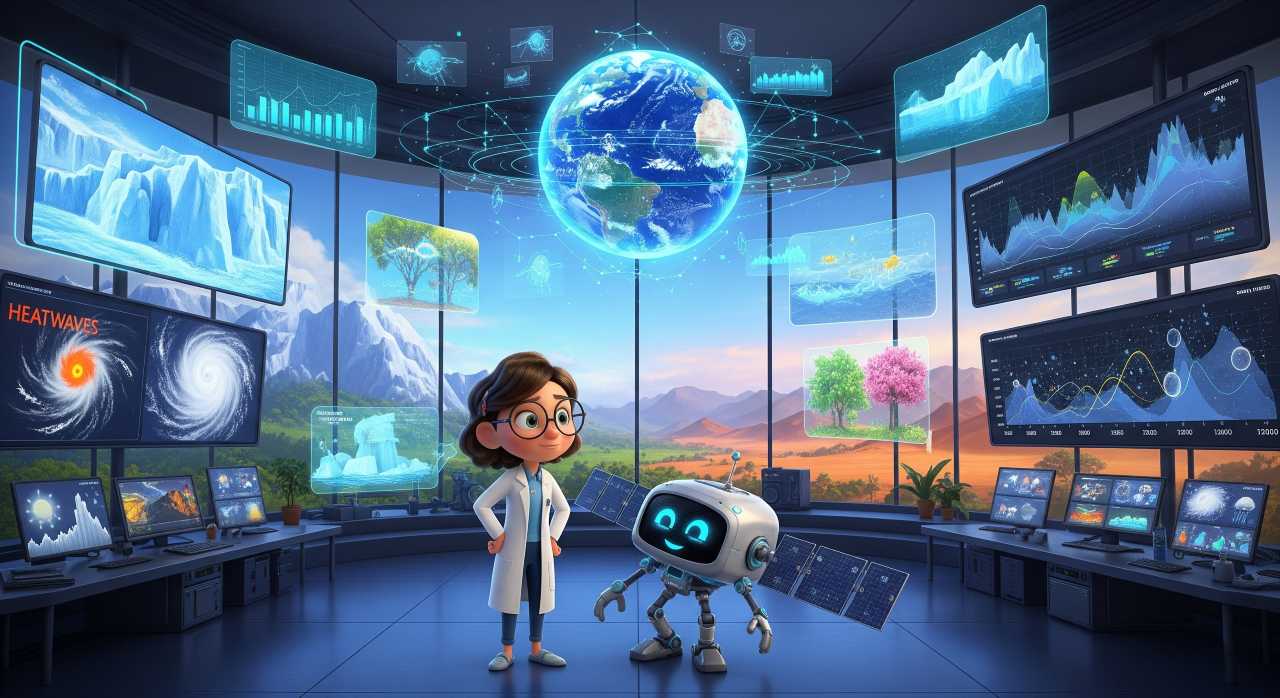
Imagine this: weather predictions that take 45 seconds instead of four hours. That’s the promise AI brings to meteorology, flipping the script on how forecasts are made. Unlike traditional models that run on billion-dollar supercomputers, machine-learning models can run on everyday laptops, processing decades of climate data in seconds.
This massive speed boost isn’t just cool—it’s critical. Hyper-local forecasts, storm tracking, and real-time climate alerts could soon be available to every farmer, pilot, or commuter. AI doesn’t just democratize weather data—it turbocharges it.
But there’s a trade-off. Many AI models operate at lower resolutions than the most powerful physics-based systems. That means small-scale events—like flash floods or intense thunderstorms—can slip through the cracks. And because they average out data over decades, AI models can miss the fine detail that makes a forecast truly actionable.
Fast? Absolutely. Flawless? Not quite. But it’s a start—and it’s only getting better.
How AI Weather Forecasting Is Transforming the Forecast Industry
The rise of AI weather forecasting isn’t just about speed—it’s about a shift in how we interpret the skies. Tools like Google’s GraphCast and Microsoft’s Aurora are already outperforming traditional systems like ECMWF’s IFS in certain metrics. So yes, in some cases, the AI weather app is smarter than the old-school model.
Still, it’s not a clean sweep. These AI systems excel at predicting large-scale atmospheric pressure patterns but stumble at the hyper-local level—rainfall, wind speed, or temperature variation in your neighborhood. That’s where human expertise and physics-driven models step back in.
But what if we combine the two? That’s what the Met Office is doing, building hybrid systems that merge AI’s speed with physics’ precision. The result? Faster updates, more accurate storm warnings, and even postcode-specific forecasts that could give your umbrella a heads-up before the rain hits.
This hybrid future isn’t just plausible—it’s already happening.

Will Weather Forecasters Become Obsolete?
Spoiler alert: not anytime soon. AI might be fast and efficient, but humans still bring context, trust, and storytelling—especially when extreme weather strikes. Sure, some countries are testing AI-generated weather presenters, but “no one wants an AI Derek,” quips BBC forecaster Aidan McGivern.
What AI can do, though, is empower meteorologists. By handling bulk data analysis and spitting out hyper-local insights, it frees up human forecasters to do what they do best: interpret, explain, and connect. And as Professor Kirstine Dale of the Met Office points out, AI’s speed could help save lives by delivering quicker warnings for storms, floods, or heatwaves.
In the future, AI might even help forecast space weather—solar storms that mess with satellites and power grids. But even in space, AI can’t replace human judgment just yet.
Bottom line: AI is the new co-pilot, not the captain. And for now, your favorite weather forecaster isn’t going anywhere.
One reply on “Can AI Weather Forecasting Really Predict the Climate?”
Linktree Cryptozink11
KRIPTO11
Mercedescountryhills