
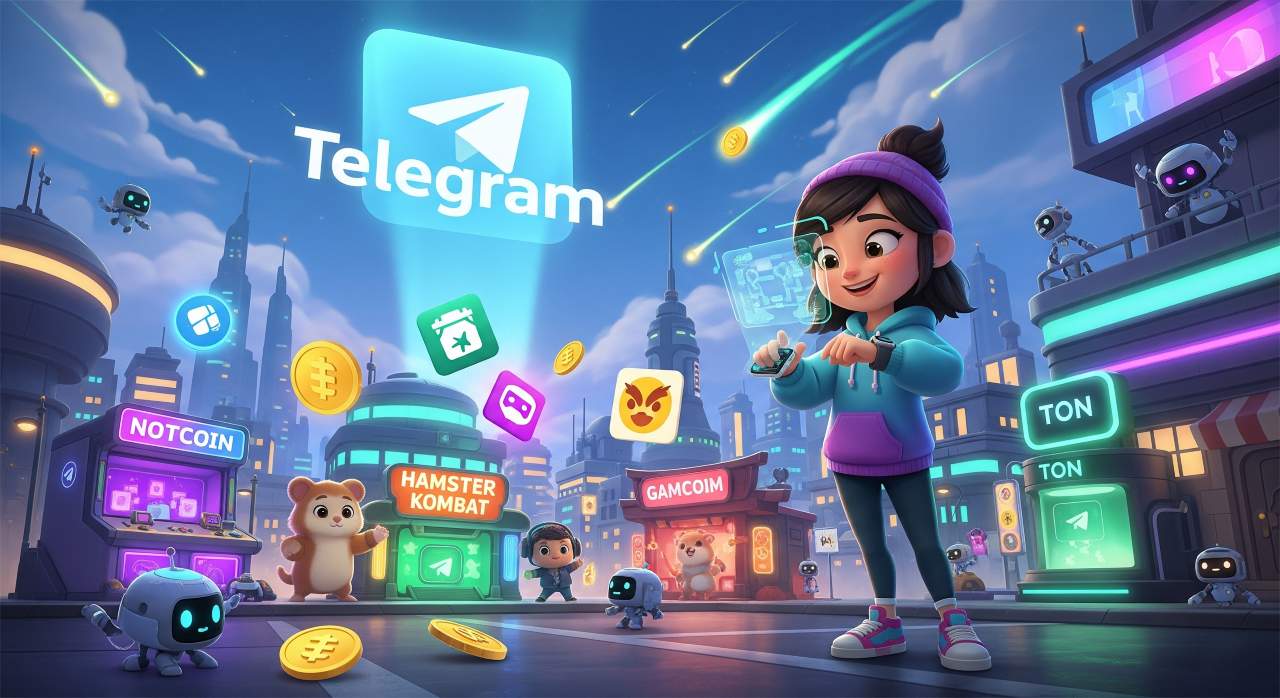
The Open Network (TON) isn’t just another blockchain — it’s Telegram’s bold move to redefine how crypto intersects with social engagement. Originally developed by the Telegram team and later open-sourced, TON has evolved into a robust, developer-friendly ecosystem uniquely positioned to power Web3 applications within the world’s most downloaded messaging app.
At the heart of this transformation lies Toncoin ($TON), the native currency powering smart contracts, governance, and user rewards. With strategic integrations, rising developer interest, and mega-viral social games like Hamster Kombat and Notcoin, the TON blockchain has exploded into the spotlight — not just for its tech, but for its timing. As crypto pivots toward consumer adoption, TON offers frictionless access to dApps embedded right into Telegram chats.
This deep dive — inspired by Delphi Digital’s latest report — breaks down TON’s architecture, governance quirks, explosive game growth, and what it all means for the next-gen investor.
Is Toncoin a Real Coin? Why the $TON Token Powers More Than Just Hype
Let’s clear the air — Toncoin isn’t vaporware. It’s a fully operational, proof-of-stake utility token that serves as the fuel for everything happening on the TON blockchain. Much like Ethereum’s ETH or Solana’s SOL, $TON is used to pay for deploying and executing smart contracts, covering everything from storage to compute fees. Validators must stake it, and developers must spend it. So yeah — it’s as “real” as it gets in the crypto world.
But there’s more: Toncoin also powers a unique economic model. While its supply inflates at 0.6% annually, half of all network fees are burned — making $TON both deflationary and growth-linked. As of June 2024, over 2.8 million TON were burned annually, offsetting a 30.6 million increase in supply. For long-term investors, that’s a strong signal of sustainable tokenomics.
Bottom line? Toncoin is real, usable, and deeply woven into the fabric of TON’s expanding ecosystem.
How Games Like Notcoin & Hamster Kombat Are Fueling a Crypto Renaissance
TON’s breakout moment? Social games. Notcoin pulled in 40 million users in six months. Hamster Kombat topped that, hitting over 200 million users and 30 million daily actives. These aren’t just flukes — they’re engineered viral loops powered by Telegram’s chat infrastructure and TON’s seamless blockchain integrations.
Telegram’s February 2025 announcement supercharged this trend. By promising to split ad revenue 50/50 with creators via Toncoin, the messaging giant turned attention into income. The result? A 40% surge in Toncoin’s price and a deluge of new devs racing to build games and mini-apps.
But here’s what makes it really Gen-Z friendly: These games combine meme culture, play-to-earn mechanics, and social interaction — all native to Telegram. They’re not just onboarding users to crypto; they’re giving them reasons to stay, engage, and invest.
Why the TON Ecosystem Matters for the Future of Web3 Gaming
The TON ecosystem isn’t just a tech stack — it’s a full-on movement. With bridges, wallets, dApps, and games all embedded inside Telegram, TON offers one of the lowest-friction Web3 experiences in existence. That’s especially key for Gen-Z users who demand instant access and zero complexity.
The TON blockchain enables this through clever architecture. Developers deploy smart contracts by paying with $TON, while validators earn rewards through staking. It’s Ethereum-style infrastructure with Telegram-style reach. Supporting apps like Catizen and TAP Fantasy have generated millions in revenue — not just hype. That’s crucial for proving that Web3 gaming isn’t just about speculative tokens but real, sticky user engagement.
It’s no wonder more than 36,000 devs are now active in TON’s community — including a growing Mandarin-speaking cohort. That cross-cultural growth reflects TON’s ambition to go global, fast.
What Challenges Could Break TON’s Momentum?
Every rocketship has turbulence — and TON is no exception. Despite massive adoption, the ecosystem still faces growing pains. The governance structure is heavily centralized: 92% of Toncoin is held by the top 100 wallets, giving whales outsized influence. That’s not great optics for a decentralized network.
Botting is another looming issue. As the rewards grow, so does the temptation to cheat the system. Bots can flood games, dilute rewards, and create sell pressure — a toxic loop for token holders. Without stronger anti-bot tools or smarter game design, this could spiral.
Still, there are reasons to stay bullish. Telegram’s new “Stars” IAP system makes it easier for users to spend real money on in-game items, helping developers monetize more reliably. And initiatives like the $90M dev fund and Open League Hackathon show that TON’s core team is playing the long game.
One reply on “Telegram’s TON Ecosystem: The Future of Crypto Gaming”
Linktree Cryptozink11
KRIPTO11
Really Bad Advice