
DeFi Rug Pull: Vanishing Liquidity and the Dark Side
When hype meets anonymous code, a DeFi Rug Pull can drain liquidity in seconds. Traders chase “the next 100x,” yet a single function call-or a stealthy liquidity withdrawal-can nuke a pool and leave holders with worthless tokens. This guide shows you how rug pulls work, which red flags you can measure on-chain, and what a practical defense looks like before, during, an d after an attack.
List of rug pull crypto: patterns, names you’ll hear, and how to verify
You’ll often see threads titled “List of rug pull crypto” during market peaks. Instead of relying on hearsay, build a repeatable checklist and verify each claim on-chain. Below is a practical List of rug pull crypto starter set-not an accusation list, but a research prompt you can copy and adapt:
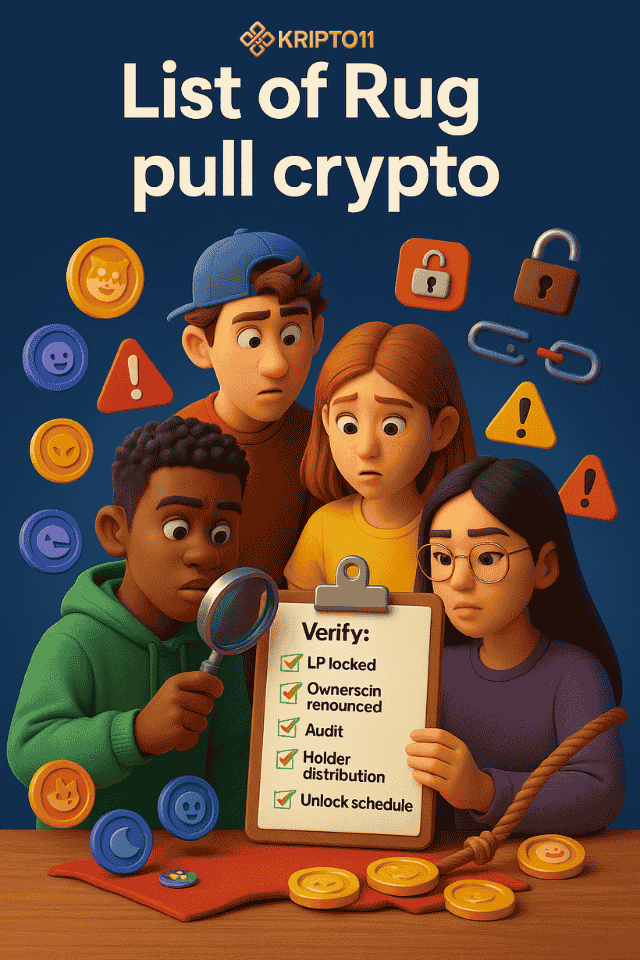
List of rug pull crypto (research prompts)
- Tokens where deployers held >70–90% of the supply or liquidity at launch.
- Projects with unlock timers under 7–30 days and no public vesting map.
- Pools without a locked LP or with LP tokens sent to an EOА (externally owned account), not a time-lock.
- Contracts that still retain owner privileges, migrator functions, or unlimited mint.
- Tokens flagged by scanners as honeypots (buy-only or sell-blocked).
- “Rebranded” forks with copied docs, copy-pasted audits, or missing repos.
- Influencer-led launches where paid shills outnumber independent reviewers.
How to verify each candidate on-chain (fast workflow)
- Holders tab: Check the top 10 wallets and contract roles.
- Liquidity tab: Confirm LP lock, locker address, and duration.
- Contract read/write: Look for mint, pause, blacklist, setTax, setMaxTx, and migrate.
- Transactions heatmap: Identify sudden LP removals or centralized wallet flows.
- Docs & repo: Compare claimed tokenomics to actual contract parameters.
If you still want a community-curated “List of rug pull crypto,” save it as a living spreadsheet with sources, then only add entries after you collect links to block explorer evidence and timeline notes.
How DeFi Rug Pulls work: liquidity games, mint switches, and social-proof loops
A DeFi Rug Pull usually exploits one of four mechanics. Individually they hurt; combined they devastate.
1) Liquidity pool withdrawal (“the classic hard rug”)
Developers seed liquidity, push hype, and then pull LP tokens to drain the pool. Price collapses because buyers can’t exit at a fair ratio anymore. Because the contract remains tradable, victims often realize too late.
2) Honeypot taxes and sell blocks
Some tokens add exorbitant sell taxes (e.g., 50–100%) or blacklist sellers. You can buy. You can’t sell.
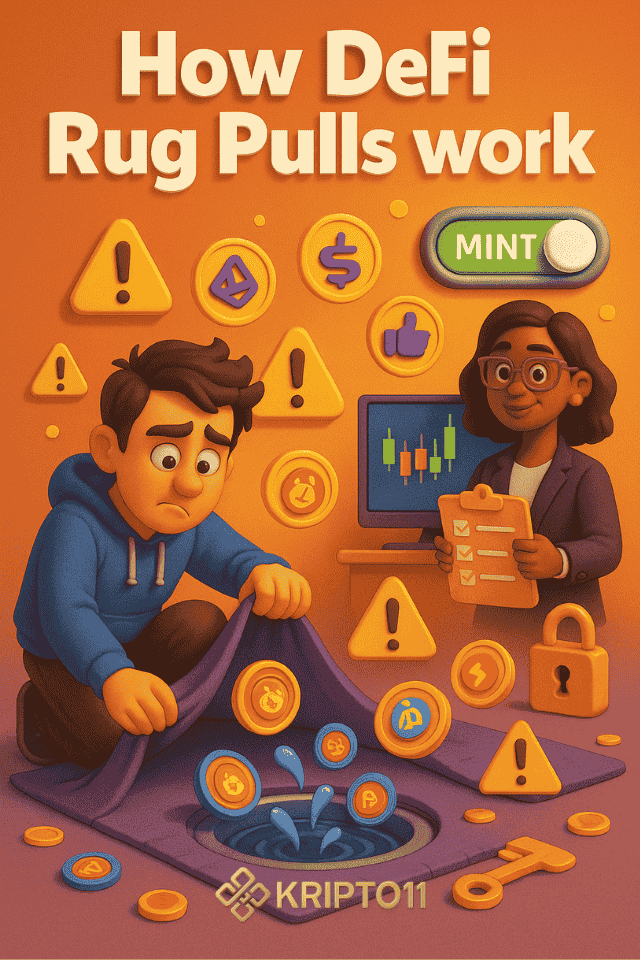
Scanners sometimes catch this; however, many contracts hide the switch behind owner-only methods that flip later.
3) Unlimited mint or hidden backdoors
If the owner can mint at will, scarcity becomes an illusion. A stealth mint floods supply, price craters, and insiders exit into the remaining liquidity. Similarly, migrator or upgrade hooks can redirect funds to attacker-controlled contracts.
4) Social proof loops and exit timing
The team surrounds itself with borrowed credibility—pay-to-play audits, rented KOLs, and “partnership” logos. Liquidity grows, then the team exits during a volume spike, leaving holders with empty bags.
On-chain red flags you can measure (with checklists)
You cannot “wish” risk away. Instead, measure it.
Liquidity & ownership checklist
- LP lock proof: Locker address, lock duration, and unlock calendar.
- Ownership status: Has the contract renounced ownership, or does an owner wallet still exist?
- Admin functions: setFees, setMaxTx, excludeFromFees, blacklist, pauseTrading, mint, burn, migrate.
- Top holders: If the top 10 hold >70%, price discovery is fragile.
Tokenomics & distribution checklist
- Vesting map: Team, advisors, marketing, ecosystem, and exact cliffs.
- Emissions math: Does the emissions schedule match the pitch deck?
- Treasury custody: Is the treasury in a multisig with doxxed signers and a published policy?
Code & audit reality check
- Repo parity: The deployed bytecode should match the repo commit hash.
- Audit scope: One audit ≠ safety. Ask which files, which findings, and whether criticals remain unresolved.
- Proxy pattern: Upgradable proxies enable post-launch changes. That can be good; it can also be abused.
Market structure checks
- CEX/DEX depth: Thin books amplify exits.
- Bridges & wrappers: Multi-chain tokens add complexity and new failure points.
- Taxes: Buy/sell taxes above 10–12% usually serve insiders, not users.
Threat models and scenarios: from soft rugs to hard exits
Not every collapse looks the same. Map the attack types so you can react fast.
DeFi Rug Pull: Hard rug (LP yank)
LP pulled, price nuked, no graceful unwind. Forensic goal: tag exit wallets, snapshot holders, and preserve proofs for recovery attempts.
Soft rug (perpetual sell pressure)
Team dumps emissions or vested tokens gradually. Price bleeds while messaging stays upbeat. You won’t see a single “event,” only structural sell-pressure. The mitigation is position sizing and strict unlock calendars.
Honeypot switch
Trading opens with normal parameters; later, owner flips sell tax or blacklist. Always re-check contract state after major updates, not just at launch.
Slow-rug via upgrades
With a proxy, the team pushes an “upgrade” that quietly adds withdraw hooks or mint levers. Watch proxy admin ownership and upgrade events.
Cross-chain bridge failure
Liquidity becomes fragmented. If a bridge halts or exploits occur, one side of the market trades at a steep discount. Exit plans must consider where your liquidity actually sits.
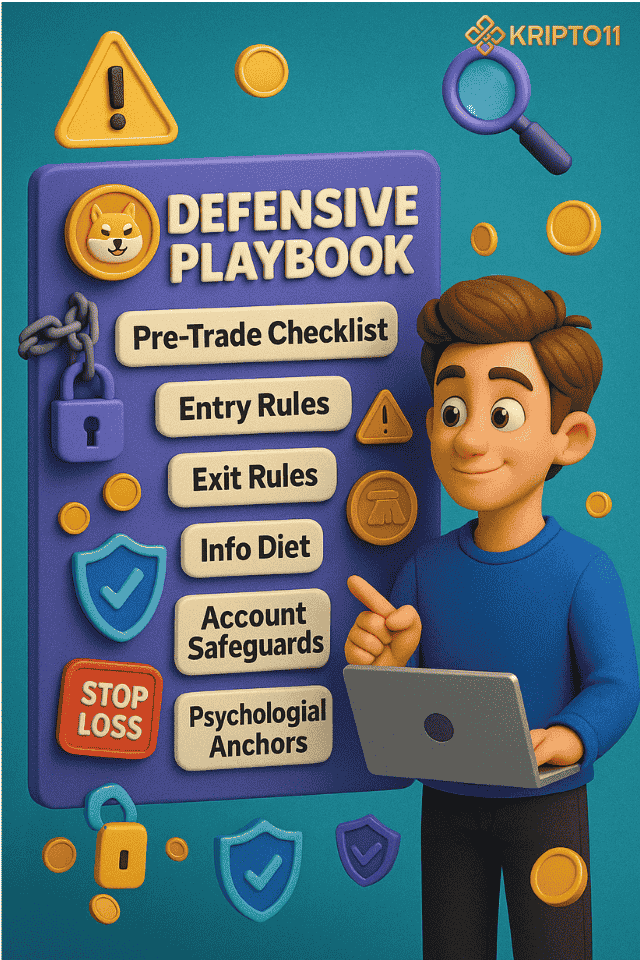
Defensive playbook: detect, avoid, and respond
You can’t remove all risk; however, you can stack edges.
Before you buy (due diligence in 15 minutes)
- Contract control: Confirm owner and admin roles. If unrenounced, read the docs on why.
- LP discipline: Validate lock duration > 6–12 months or protocol-owned liquidity with public policy.
- Supply map: Chart top holders, vesting cliffs, and unlock dates.
- Tax sanity: Ensure taxes allow two-sided trading under stress.
- Team trail: Cross-check identities, prior repos, and shipped code, not just avatars.
You can’t remove all risk; however, you can stack edges.
Before you buy (due diligence in 15 minutes)
- Contract control: Confirm owner and admin roles. If unrenounced, read the docs on why.
- LP discipline: Validate lock duration > 6–12 months or protocol-owned liquidity with public policy.
- Supply map: Chart top holders, vesting cliffs, and unlock dates.
- Tax sanity: Ensure taxes allow two-sided trading under stress.
- Team trail: Cross-check identities, prior repos, and shipped code, not just avatars.
First-hour rules (execution)
- Scale in with smaller tickets until you verify post-launch states.
- Set a “red-flag stop”: if any admin function toggles unexpectedly, reduce risk.
- Watch LP unlock clocks and events; adjust exposure before unlocks.
During a suspected DeFi Rug Pull
- Check the pool: Has LP balance dropped? Have taxes spiked?
- Scan events: Look for Transfer, Mint, or proxy Upgraded logs.
- Exit proactively if core assumptions break. Hoping rarely restores liquidity.
- Document everything: TX hashes, addresses, and timestamps matter for any claim.
Aftermath and recovery paths
- Chain analysis: Tag the attacker’s route through mixers, bridges, or exchanges.
- Community action: Coordinate evidence into a single case file. Fragmented noise helps no one.
- Notifications: If centralized venues were used, file abuse reports with TX proofs.
- Lesson log: Update your List of rug pull crypto (research prompts) with new patterns.
Risk management habits that compound
- Position sizing: Never size a new token beyond a small percent of liquid NAV.
- Staggered exits: Take wins mechanically; let a ruleset, not emotion, decide.
- Tooling: Use multiple scanners, block explorers, and tax/ownership checkers.
- Play the long game: Sustainable returns come from repeatable process, not a single moonshot.
FAQ – DeFi Rug Pull Vanishing Liquidity and the Dark Side
Q1. What is a DeFi Rug Pull?
A. A DeFi Rug Pull is an exit scam where deployers or insiders remove liquidity, trap sellers, or mint new tokens to siphon value. Because most activity happens on-chain, you can verify the mechanics if you know where to look.
Q2. How do I create my own “List of rug pull crypto” safely?
A. Frame it as research prompts and cite on-chain evidence for each entry. Avoid naming projects without explorer links, admin-function screenshots, and timeline notes.
Q3. Which on-chain red flags matter most?
A. Centralized LP control, owner-only functions (mint, migrate, blacklist), unverified vesting, and top-holder concentration. Moreover, taxes that block selling often signal a honeypot.
Q4. DeFi Rug Pull: Are audits enough?
A. No. Audits reduce risk; they don’t eliminate it. Always confirm what was audited, what remains open, and who controls upgrades.
Q5. How can I reduce the chance of being rugged?
A. Use a 15-minute due-diligence routine, enforce position sizing, and re-check contract state after launches or upgrades. Additionally, track LP locks and unlock calendars.
Q6. What should I do if a rug is in progress?
A. Verify LP changes and admin flips, exit quickly if assumptions break, and document TXs for any future claims. Then record the pattern so you and your community won’t repeat the mistake.

One reply on “DeFi Rug Pull: Vanishing Liquidity and the Dark Side”
[…] If you must move through DeFi, minimize hops. Fewer transactions mean fewer narrative gaps during […]